
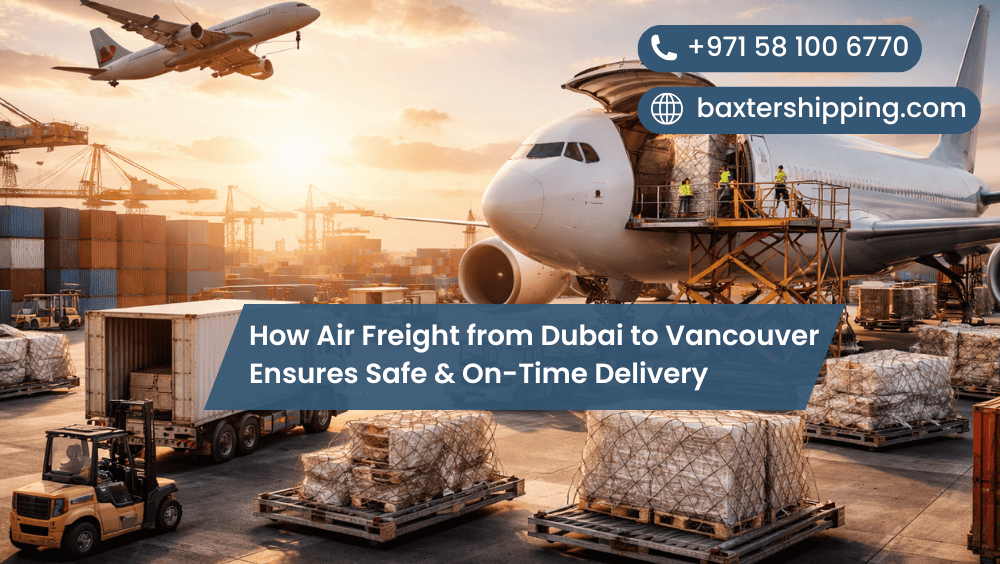
For instance, air freight from Dubai to Vancouver is among the most reliable options when businesses and families require cargo to travel quickly across continents. Dubai is one of the world’s biggest cargo centers; Vancouver links shipments into British Columbia and beyond to time-honored airport logistics networks. With the YVR reporting 30,054 tonnes of cargo movements in January 2026 alone and DXB handling a whopping 2.2 million tonnes of cargo in all of 2024 it is clear just how significant both gateways are to global flows of cargo.
Whether it involves commercial goods, urgent spare parts, medical items, retail stock, electronics or personal cargo Dubai to Vancouver air cargo allows speed along with controlled handling and greater by delivery predictability. That’s incredibly important when time is short and product condition can’t be compromised.” Furthermore, end-to-end cargo services like freight forwarding, warehousing and distribution, and shipment visibility have become essential when it comes to keeping international deliveries safe and on time.
Why air freight from Dubai to Vancouver is trusted for urgent shipping
The biggest advantage is speed. Sea freight can be ideal for larger cargo — the downside is that it almost always takes longer. Air cargo to Vancouver from Dubai, by contrast, is intended for consignments that require faster uplift and tighter schedules with reduced transit unpredictability.
This route works especially well for:
- Urgent commercial cargo
- High-value products
- Fragile or sensitive shipments
- Time-bound e-commerce orders
- Documents and priority parcels
- Exhibition or event materials
- Personal effects that must arrive quickly
Air freight cuts down on the number of handling stages and reduces transit time, so it mitigates risk of delay, damage and long-term in-storage exposure. It also makes for better planning of delivery and stocks—businesses can adjust inventory accordingly, while customers get their goods when they really expect them. Get details on Moving to Canada.
The role of Dubai in secure international cargo movement
Dubai is also more than a departure point. It is a logistics powerhouse. DXB continues to rank among the world’s most connected aviation hubs, with flights connecting 272 destinations in 107 countries and cargo throughput of 2.2 million tonnes during 2024. That scale enables better routing options, more frequent connections and stronger back-up planning if schedules change.
For shippers, that means:
- Faster cargo acceptance and processing
- Better airline and routing flexibility
- Stronger export documentation support
- Reliable ground handling and cargo coordination
- More options for priority and special cargo services
So, when a shipment leaves Dubai, it usually enters a well-organised export ecosystem instead of a loose chain of disconnected handlers.
Why Vancouver is a strong destination for air cargo
On the receiving end, Vancouver has huge benefits. YVR is a critical hub for international travel within Canada, and its cargo infrastructure facilitates seamless inbound processing for goods heading to British Columbia and beyond. Scalability: Current airport data indicates ongoing cargo activity at scale, which enables reliable import processing and onward distribution.
That benefits importers in several ways:
- Faster cargo recovery on arrival
- Better access to western Canada markets
- Easier onward trucking connections
- Improved support for temperature-sensitive and valuable goods
- Strong customs and inspection workflows
Therefore, air freight to Vancouver from Dubai is not only about flight speed. It is also about what happens before departure and right after landing. Looking for a International Packers & Movers in Dubai?
How shipments stay safe during Dubai to Vancouver air freight
Safety in air freight depends on planning, packaging, documentation, and handling discipline. It is not luck. It is a process.
1. Proper cargo screening before departure
Before uplift, cargo usually goes through screening, verification, and acceptance checks. These steps confirm that the shipment matches declared details and meets airline and airport regulations. This lowers the chances of hold-ups later.
2. Professional packing and labelling
Packing well keeps cargo safe from vibrations, pressure of stacking, and temperature change. Good labelling also allows handlers to more accurately identify fragile, upright, hazardous or priority items.
3. Controlled handling at cargo terminals
Cargo station management, freight forwarding and warehousing support systems provided by major logistics operators reduce unnecessary movement and misrouting. Fewer errors now often require fewer corrections to ensure a safe delivery later.
4. Documentation accuracy
A small paperwork mistake can hold up an international shipment massively. Clear invoices, packing lists, airway bills, permits and customs declarations keep cargo flowing without unnecessary delays for inspection.
5. Tracking and visibility
Today’s air freight solutions are far more visible to shippers. Milestone tracking gives clients visibility into when cargo is accepted, loaded onto a truck or plane, departed on its journey, landed at the destination airport or port of entry, customs cleared and available for final delivery. Get details on International Cargo Movers in Dubai.
How on-time delivery is achieved on this route
A shipment does not arrive on time only because an aircraft flies fast. Timely delivery happens when every stage lines up properly.
Booking the right service level
Some cargo needs express handling. Other shipments can move through standard air freight service. Choosing the right option at the start prevents mismatch between expectations and budget.
Smart flight planning and route selection
Dubai’s strong airline connectivity allows forwarders to choose routings that support delivery deadlines. That flexibility can reduce missed connections and long dwell times.
Pre-clearance preparation
When import documents are arranged early, customs processing in Canada becomes smoother. This helps avoid cargo sitting at destination while the consignee scrambles for missing paperwork.
Destination coordination
After the goods arrive in Vancouver: local handling, customs clearance and last-mile planning are just as critical as the flight. A firm coordination between the teams, both at origin and destination, ensures timelines are more realistic and consistent. Looking for a International Moving Company in Dubai?
Comparison table: Why air freight works for urgent Dubai–Vancouver shipments
Factor
Air Freight from Dubai to Vancouver
Sea Freight Alternative
Delivery speed
Fastest option for urgent cargo
Much slower for time-sensitive goods
Cargo safety
Better for fragile, high-value, and priority shipments
Suitable for bulk cargo but longer exposure
Tracking visibility
Usually more precise and milestone-driven
Often slower status updates
Inventory planning
Helps reduce stockouts and urgent delays
Requires longer planning window
Best for
Electronics, urgent parts, documents, retail stock, personal effects
Heavy machinery, bulk household goods, non-urgent large cargo
What kind of cargo commonly moves by air from Dubai to Vancouver?
Many cargo categories fit this route well, especially when delivery windows are short.
Common examples include:
- Electronics and mobile devices
- Pharmaceutical and healthcare items
- Retail and fashion shipments
- Automotive spare parts
- Industrial components
- Business documents
- Samples and prototype materials
- Personal effects and excess baggage cargo
For these categories, speed often protects value. A late shipment can mean lost sales, production delays, or customer complaints. So businesses often choose air freight not because it is cheap, but because it saves bigger costs elsewhere. Get details on International Air Cargo Service in Dubai.
Common reasons shipments get delayed — and how to avoid them
Even efficient routes can face delays when the basics are ignored.
Incomplete documents
Missing invoices, vague cargo descriptions, or wrong consignee details often slow customs.
Weak packaging
Poor carton strength or incorrect palletisation can trigger damage or repacking delays.
Last-minute booking
Peak periods can tighten space availability, so early planning helps secure better movement.
Incorrect cargo classification
Dangerous goods, batteries, liquids, or regulated goods need correct declaration from the start.
Unclear delivery instructions
If the destination contact, broker details, or final address are incomplete, cargo can sit longer than expected.
The fix is simple, honestly: work with a freight team that checks every detail before cargo moves.
Related Articles:
» Customs Duties When Moving to Canada from UAE
» Household Goods Shipping from UAE to Canada
» How Freight Forwarders Simplify Global Relocation?
» How Freight Forwarding Makes Business Relocations Easier?
» Moving Abroad from Dubai: International Freight Solutions
Why businesses choose Baxter Shipping for Dubai to Vancouver air cargo
A reliable shipping partner does more than book cargo space. A good forwarder helps prevent problems before they happen.
That includes:
- Shipment planning based on urgency and cargo type
- Export paperwork guidance
- Packing and handling advice
- Freight coordination from pickup to delivery
- Customs support
- Clear updates during transit
- Practical solutions if schedules shift
In international shipping, communication is almost as important as transport itself. They want to know where the shipment is, what documents need to be available and when delivery can take place.” When that communication remains clear, the entire process is easier.
Safe, Fast and Efficient Air Cargo from Dubai to Vancouver
Air freight offers to transfer air from Dubai to Vancouver in a safe and punctual method as it integrates speed, structured coping with, stable airport infrastructure, and larger shipment management. Dubai is a strong export hub and Vancouver is a quick access point to Canada. Combined, they make a viable pathway for critical, high-value and time-sensitive freight.
As for companies that can’t afford to wait for stocks through a sea route, and individuals who must get important cargo delivered in short waiting time frame, Dubai to Vancouver air freight service is still one of the most clever logistics decisions. When the shipment is packaged well, paperwork done accurately, and handled with an experienced freight partner, safe on-time delivery becomes much more attainable.
FAQs on “Air Freight from Dubai to Vancouver”
Transit time may differ depending on airlines schedule, type of cargo, customs procedures and direct or connection shipping. That being said, air freight is still the quickest method for this route.
You could ship commercial cargo, electronics, documents, urgent spare parts. medical supplies and some personal belongings in accordance with airline and customs laws.
Yes, in many cases. Air freight from Dubai to Vancouver usually will have a smaller transit time and reduced number of handling stages, which is going in favour of reducing the risk with fragile or high-value commodities.
Typical documentation includes: Commercial invoice, packing list, airway bill, shipper & consignee and all the licenses for restricted items.
Yes. Customs can block the release of shipments for invoices incomplete or with errors on cargo. Good paperwork helps avoid that.
Yes, personal effects can sometimes catch a flight — especially if it’s more important to get something delivered urgently than to move big bulk for cheap low cost.
Tariff is based on chargeable weight, dimensions, nature of cargo, urgency of transfer, availability of airline capacity, fuel surcharges and special handling requirements.
Many freight forwarders also offer door-to-door services that include pickup, export handling, air transport, customs arrangement and final delivery.
Yes. Priority or express services can get urgent cargo moving sooner, though rates tend to be higher than standard air freight.
These include booking early, submitting complete documents, packing properly, declaring cargo correctly and working with an experienced shipping provider.
Vancouver has solid airport cargo infrastructure and good access to western Canada, allowing for faster onward distribution.
It’s a popular choice for businesses when cargo is time critical, valuable or fragile, or when delivery deadlines are an issue. In many instances, speeding protects revenue and customer satisfaction better than a low freight cost.